The Pioneer Museum
The Pioneer Museum is a memorial that celebrates a unique community that was created by early settlers for future generations. Explore a shared narrative of this community's past. Historic structures, authentic objects, photographs, and much more. Located on 3 beautiful acres of shaded grounds, landscaped with native plants. Activities and educational programs enliven the visitor experience for all ages. Come Join Us!
The Pioneer Museum Complex includes the following:
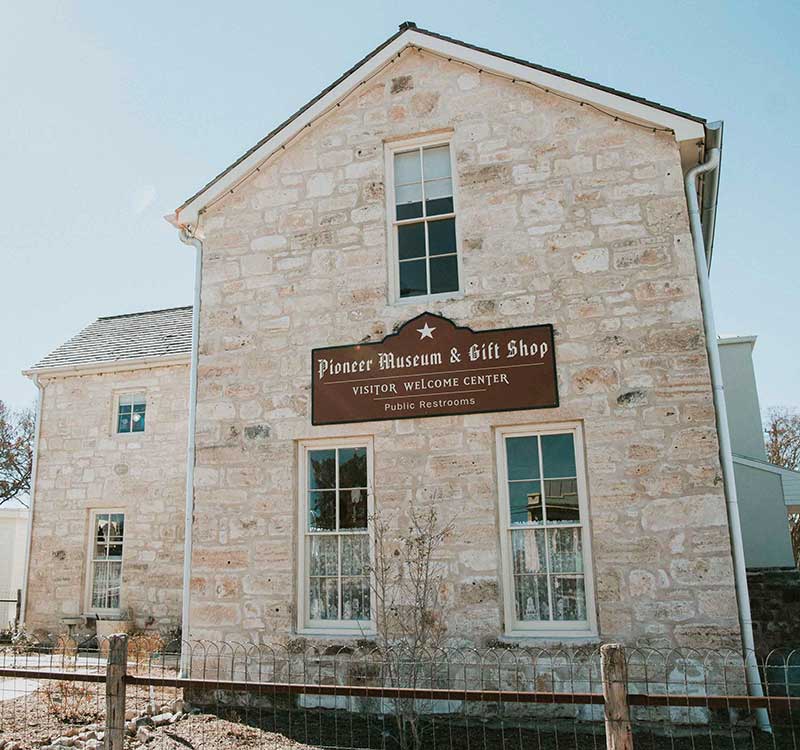
- The Dambach-Besier House which stood at 515 E. Main Street for 135 years and was moved to 325 West Main Street and reconstructed. It is now the entrance to the Pioneer Museum and serves as the West End Visitor Center for the Fredericksburg Convention and Visitors Bureau Welcome Center. The Dambach-Besier House was originally built in 1869. It was purchased by the Besier Family in 1881. In 1967 it became the Sunday House Restaurant and Convention Center. In 2005 it was disassembled, moved, and reconstructed with funding from donors to the Gillespie County Historical Society. The reconstruction of the old house at the Pioneer Museum is the signature accomplishment of Phase One of the History in the Making Campaign, and serves as a symbol of Fredericksburg’s commitment to preservation.
- The Kammlah House (circa1849) was a one-room structure with a barn and smokehouse. Throughout the years four generations of Kammlahs added three kitchens, a cellar, a stone patio, bedrooms and living areas. Between 1870 and 1924, the Kammlahs operated a general store in the front rooms. The Gillespie County Historical Society purchased the Kammlah property in 1955.
- The Fassel-Roeder House was once a one-room butcher shop. A kitchen, living room and front porch were added later. An amazing coin-operated music box from Leipzig, the Polyphony, is a centerpiece of the parlor. It sits on its original lot on West Main Street along with the Kammlah buildings.
- Walton-Smith Log Cabin (circa1880’s) was the family home of John and Nancy Walton and their three children. After John’s death, Nancy married John Smith. In the 1980s, it was discovered that the original cabin had been totally encased by additions to the house. In 1985, it was moved and rebuilt at the Pioneer Museum Complex by Cox Restoration, in memory of Jay Cox.
- The White Oak School is a one-room country schoolhouse. Charles Feller, a former student of the school donated the White Oak School to the Museum.
- The Weber Sunday House served as a place to rest when the Weber family made the seven-mile trip to town for shopping and church. The Sunday House is unique to the Fredericksburg area. As transportation became more efficient the Sunday Houses fell into disuse. Gas rationing during World War II temporarily restored the life of Sunday Houses in the Fredericksburg area.
- The Arhelger Bathhouse stood behind the Arhelger Barbershop on East Main Street. Between 1910 and 1930, travelers frequently stopped in for a haircut and shave. The bathhouse was donated to the Pioneer Museum by Kenneth and JoAnn Kothe in 1995.
- The Fredericksburg Volunteer Fire Department Museum displays firefighting equipment from the early 20th century. Fredericksburg’s Volunteer Firefighters have protected residents for over 125 years.
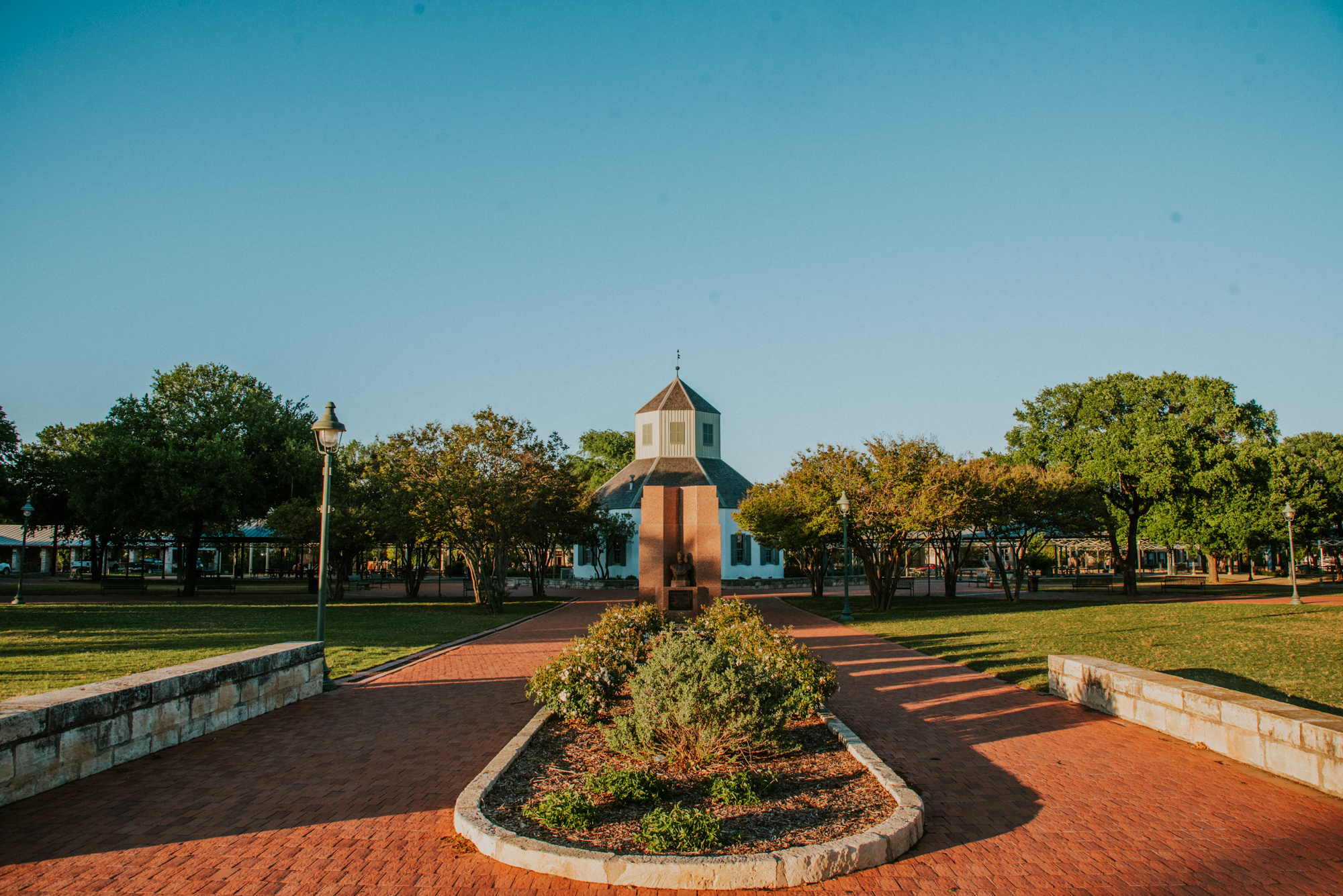
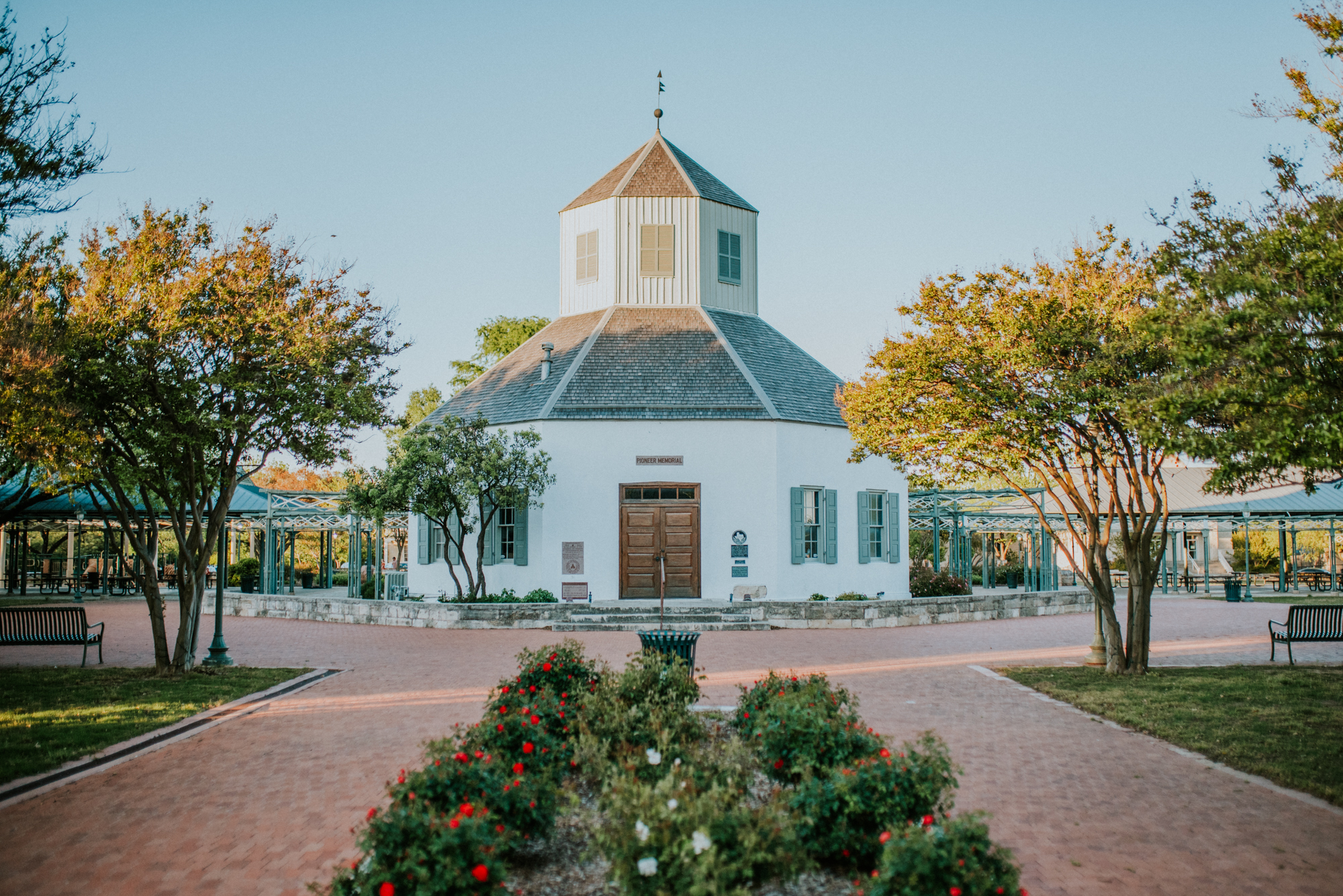
- The Vereins Kirche (an extension of the Pioneer Museum) was built soon after the arrival of the first German settlers, and stands as a tribute to the courage and vision of Fredericksburg’s founders. It was the first public building in the town, and served as a town hall, school, fort, and a church for all denominations. This is also the original site of the Pioneer Museum.The original building was destroyed in 1896, but local citizens dreamed of rebuilding it. The dream came true in 1935. A gala celebration was held to dedicate the new structure as a pioneer memorial. Today, this much-loved symbol of German heritage is centrally located in the MarktPlatz in the 100 Block of West Main Street. It contains exhibits that tell the story of Fredericksburg’s past.
For more information contact the GILLESPIE COUNTY HISTORICAL SOCIETY. The PIONEER MUSEUM Complex is located at 312 West San Antonio St, Fredericksburg, Texas 78624
Phone: 830.997.2835 or email at info@pioneermuseum.net
www.pioneermuseum.net
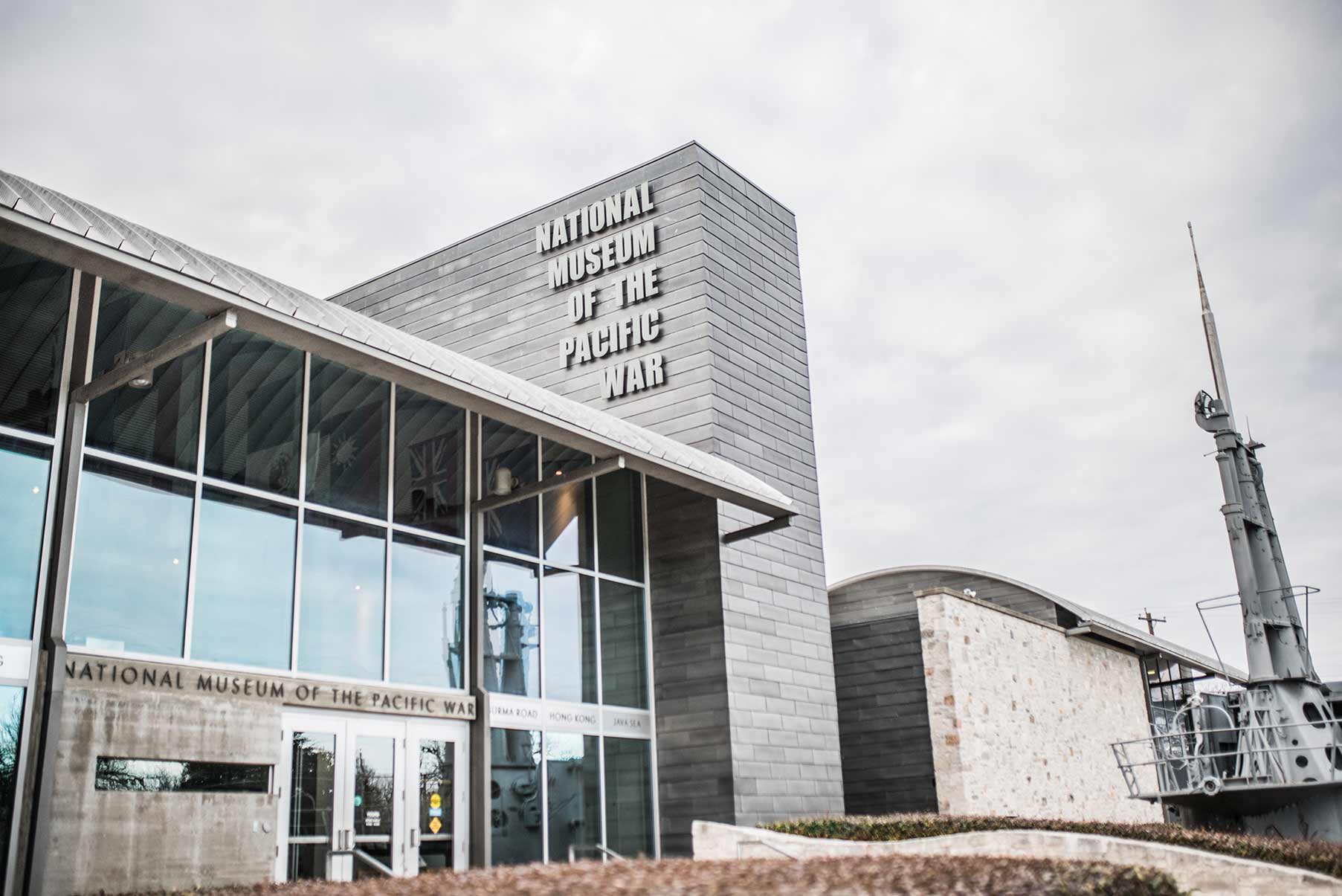
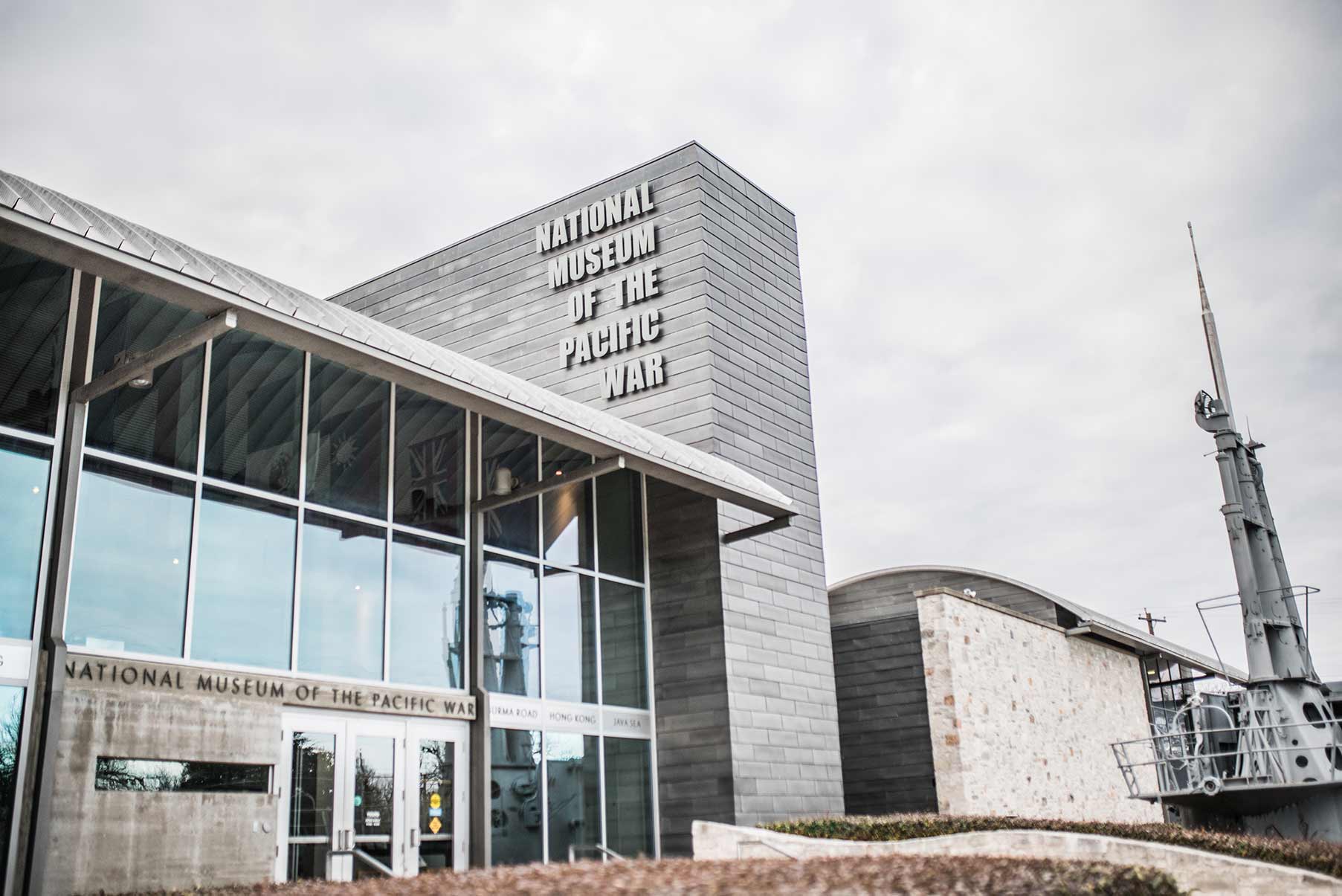
The National Museum of the Pacific War
This museum is dedicated to perpetuating the memory of the Pacific Theater of WWII in order that the sacrifices of those who contributed to our victory may never be forgotten. “We inspire our youth by honoring our heroes.” The National Museum of the Pacific War is the only institution in the continental United States dedicated to telling the story of the Pacific Theater battles of World War II. Located on a six-acres, the Museum includes the George Bush Gallery, Admiral Nimitz Museum, Plaza of Presidents, Veterans' Walk of Honor, Japanese Garden of Peace, Pacific Combat Zone, and the Nimitz Education and Research Center.
The Admiral Nimitz Museum was originally housed solely in the historic Nimitz Hotel. Today the Museum has grown into a first-class experience that can be enjoyed by people of all ages and from all backgrounds. In addition to nearly 34,000 square feet of indoor exhibit space, the museum contains an impressive display of Allied and Japanese aircraft, tanks, guns and other large artifacts made famous during the Pacific War campaigns.www.pacificwarmuseum.org
Fort Martin Scott
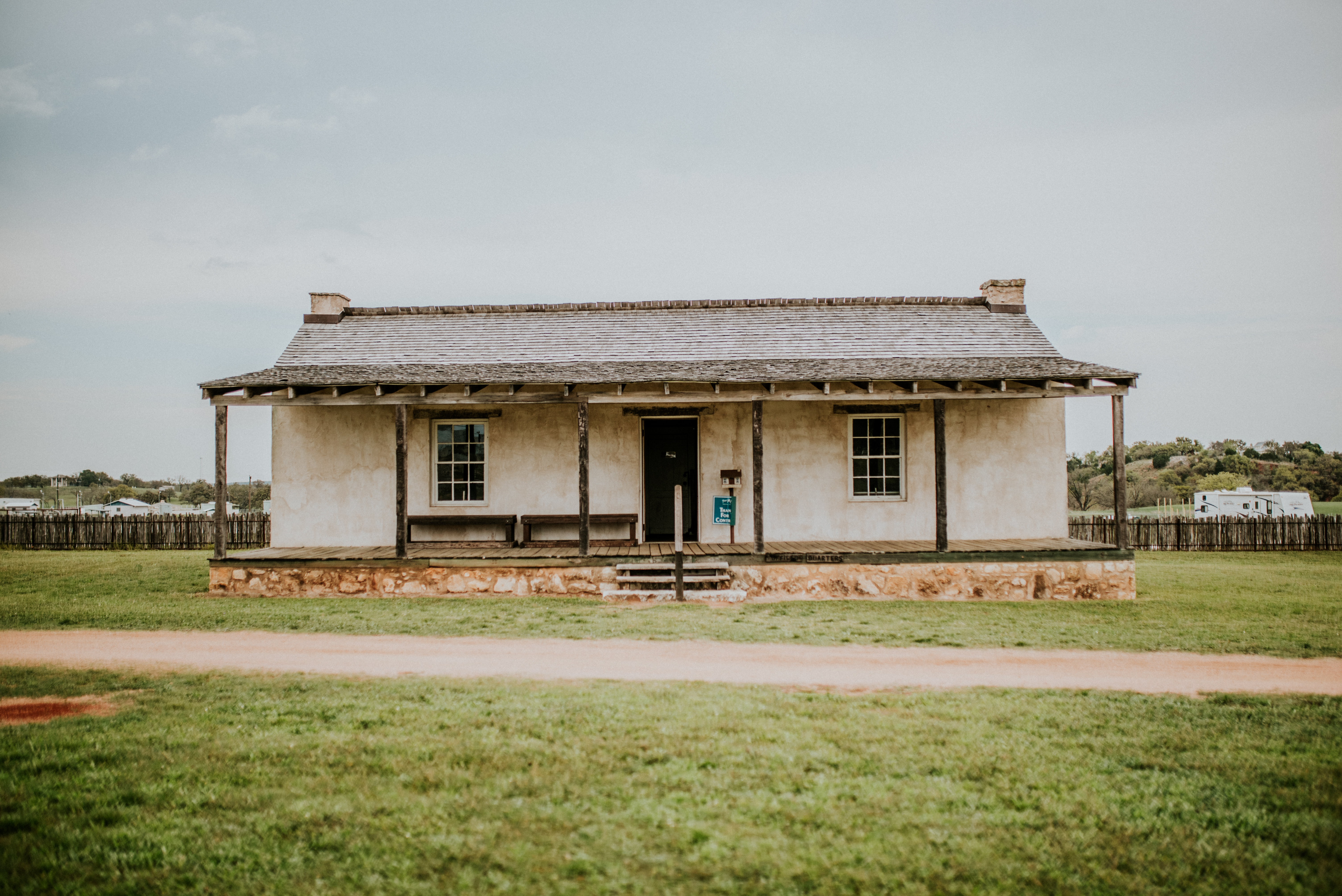
Reconstructed fort located just east of Fredericksburg on Hwy 290.
Hours: Tuesday - Friday, 10 am to 5 pm. Admission free, but donations gladly accepted. Fort Martin Scott was one of the first frontier military outposts in Texas. On December 5, 1848, a Company of the 1st infantry under the command of Captain Seth Eastman set up camp just east of the settlement of Fredericksburg. The fort provided protection from Indian tribes that inhabited the area. Originally called Camp Sam Houston, and then later “The Camp at Fredericksburg” the outpost was finally named Fort Martin Scott after Lieutenant Colonel Martin Scott. The Fort was to be the first in a series that would be established on the Texas frontier. By 1853, the frontier had moved farther west, and the Fort was abandoned. It was reoccupied during the Civil War years (1861 to 1865) by Confederate troops and was last garrisoned by the United States Cavalry in 1866.
There are exhibits in the Visitor Center and the reconstructed officers' quarters. Several times a year there are informal re-enactments, a Knap-In and The Lithic Arts Festival. It is also the site of an Inter-tribal Pow wow, which is held in May. Follow the Fort Martin Scott Museum Association on
FACEBOOK >


 My Favorites